
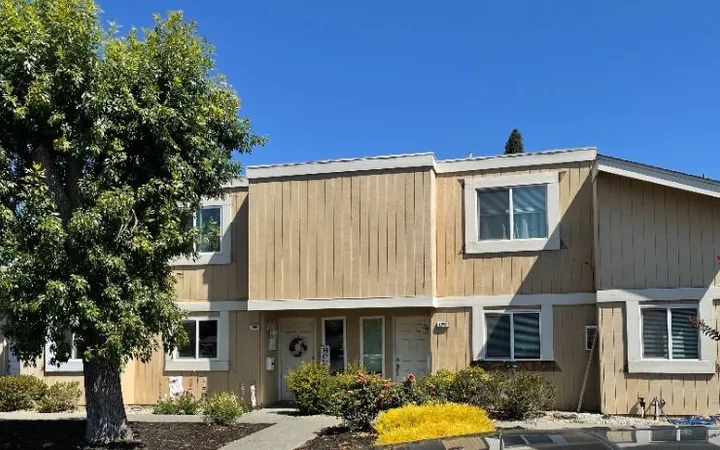
Converting Siding to Stucco: What a Facade Transformation Actually Involves
A siding-to-stucco conversion is one of the most satisfying projects in this trade. A house goes in with tired, weathered siding and comes out with a clean, durable, custom-colored stucco exterior — it’s the closest thing to a new building you can get without moving walls. We’ve done exactly this transformation on Bay Area homes, and the owners’ reaction at the end never gets old.
But here’s what every homeowner considering it should understand up front: this is not a re-skinning job. You’re not swapping one surface for another — you’re rebuilding the entire exterior wall system from the sheathing out. Done in that spirit, the result outlasts and outperforms what was there. Done as a cosmetic shortcut, it builds problems into the wall. Here’s the work, stage by stage.
Stage one: tear-off — and the only honest look you’ll ever get
The original siding comes off completely, down to the sheathing. This is more than demolition; it’s discovery. For the first time since the house was built, the entire wall is open for inspection — and what’s under old siding is rarely pristine. Weathered building paper, water staining around windows, the odd patch of soft sheathing near a roofline or deck, fastener holes by the thousand.
This is the moment to fix all of it, because it will never be this accessible again. Any contractor who plans to go from tear-off to lath in the same breath, without walking the open wall, is telling you something about how the rest of the job will go.
Stage two: the water barrier — the part that matters most
Before any metal or plaster touches the wall, the new moisture barrier goes on: a reinforced water-resistive barrier, lapped shingle-fashion so every layer directs water down and out, integrated with new flashing at every window, door, penetration, and roof-wall intersection.
It’s worth saying plainly: stucco itself is not waterproof, and was never meant to be. It’s a hard, breathable cladding that sheds most water while the barrier system behind it handles the rest. Most stucco failures we’re hired to repair trace back to this hidden layer, not the plaster. On a conversion, you get to build it new, with modern materials and nothing to undo — which is precisely why a conversion done right is such a durable wall.
This stage is also where window perimeters get their flashing properly tied into the barrier. Windows are the most common leak point in any stucco wall; on a conversion, there’s no excuse for inheriting that problem.
Stage three: lath — the skeleton
Over the barrier goes the lath: the metal mesh the stucco grips, fastened through to the framing, with weep screed at the base of the wall so any water that ever does get behind the stucco can drain out, corner aids for crisp edges, and proper terminations at every opening. Precise lath work is what gives stucco a secure foundation — sloppy lath shows up later as cracking and drumminess, and there’s no fixing it from outside the finished wall.
Stage four: three coats of stucco
Traditional three-coat stucco goes on in sequence: the scratch coat, pressed into the lath and raked to give the next coat a mechanical grip; the brown coat, which builds thickness and is floated flat and true — this is where the wall earns its straight lines; and the finish coat, which carries the color and texture you actually see.
The part nobody likes to hear: there is curing time between coats, and it can’t be rushed. Cement cures on its own schedule, and the moist-curing and waiting periods between coats are what give the wall its long-term hardness and crack resistance. A conversion is a multi-week project with quiet days built in. Beware of any schedule that doesn’t have them.
Stage five: color and texture — the part everyone sees
The finish coat is where the design decisions land: integral color mixed through the material rather than painted on, and texture — sand float, dash, lace, smooth trowel, or something custom-developed for your home. On the conversion linked above, a fresh custom-colored coating is what turned a sound wall into a striking one; the homeowners chose a finish that made the house read as modern without fighting the neighborhood. If your home is an addition-and-original patchwork, this is also where everything finally becomes one continuous facade.
What the house gets out of it
A properly executed conversion delivers more than looks: a new moisture barrier and flashing throughout, a hard cladding that shrugs off weather and sun that would have the old siding curling in a decade, and a low-maintenance exterior that wants occasional inspection rather than constant repainting. It’s a full wall assembly built new — barrier, lath, and finish as one integrated, accountable system, which is exactly how we build it.
Thinking about converting your home’s siding to stucco? Call Fogg Construction at 415-827-0782 or reach us through our contact page. We’ll look at your existing walls, walk you through the stages, and give you an honest picture of what your transformation involves.