
7 Signs of Stucco Moisture Damage in Marin County Homes
Marin County is hard on stucco. Coastal neighborhoods in Sausalito and Mill Valley sit in salt air and fog for much of the year. Inland towns like Novato and San Rafael swing between saturated winters and hot, dry summers that work cracks open a little wider each cycle. And all over the county, mature landscaping grows right up against — and into — exterior walls.
After 41 years in the waterproofing and plaster trades, I can tell you the expensive stucco problems are almost never the ones you can see. They’re the ones that have been working quietly behind the wall for years. The good news is that a wall taking on water almost always tells on itself before the damage gets structural. Here are the seven signs I look for on Marin County homes, roughly in the order owners tend to notice them.
1. Staining that comes back after every storm
A one-time stain from a clogged gutter is a nuisance. A stain that dries out in summer and reappears in the same spot every winter is a flow path — water is entering the wall at a specific point and traveling to where you see it. Pay particular attention to rust-colored streaks, which can mean the metal lath or fasteners inside the wall are corroding. Metal doesn’t rust in a dry wall.
2. Soft or hollow spots
Sound stucco is hard. Press on a suspect area with your palm; if it gives at all, the material behind it is saturated or the substrate is deteriorating. A gentle tap test tells you more — a dull, hollow sound where the rest of the wall rings tight means the stucco has separated from the wall behind it, and water is the usual cause.
3. Efflorescence — the white, chalky residue
That powdery white deposit you can rub off with a finger is dissolved mineral salt. Water moved through the wall, picked up minerals, and left them behind when it evaporated at the surface. Efflorescence is essentially a map of where moisture is traveling through your stucco. A small patch under a window is worth watching; a broad band across a wall is worth a phone call.
4. Cracks concentrated around windows and doors
Fine, scattered hairline cracking is normal on stucco and usually cosmetic. What’s not normal is a pattern: diagonal cracks running off the corners of windows and doors, or cracking clustered around openings while the rest of the wall is clean. Openings are where the wall’s water barrier is interrupted, and cracks there feed water directly to the most vulnerable flashing details in the assembly.
5. Bubbling paint or damage at the base of the wall
Stucco is supposed to terminate above grade at a weep screed — the metal edge that lets water drain out the bottom of the wall. When soil, bark, pavers, or a poured patio bury that edge, water wicks up into the wall instead of draining out. Peeling paint, crumbling stucco, or persistent dampness along the bottom foot of a wall usually points to a blocked drainage path, not a surface problem.
6. Clues on the inside of the wall
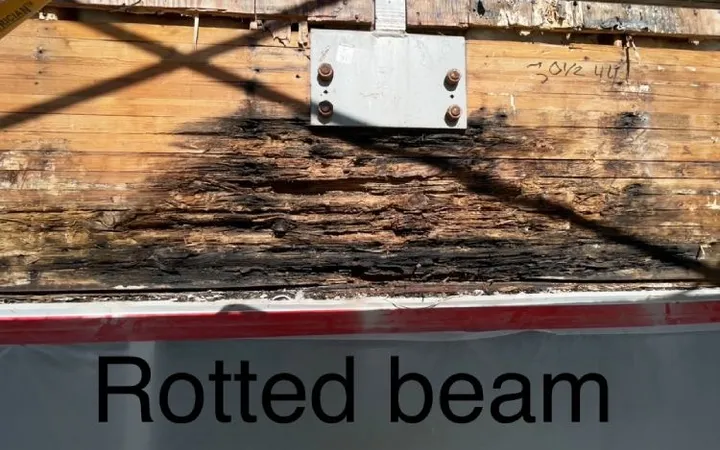
Some of the most reliable evidence never shows up outside. Musty smells in closets on exterior walls, swollen baseboards or window trim, interior paint that bubbles or stains near an outside corner — these mean water has already made it through the barrier and into the framing cavity. At this stage, the question isn’t whether there’s a leak; it’s how long it’s been running and what it has reached.
7. Vines and vegetation growing on the stucco
Ivy and climbing vines look charming on a Marin facade, and they are genuinely destructive. Tendrils root into hairline cracks, pry them open, and give water a permanent path behind the surface. We restored a Novato home where vines had penetrated the stucco and compromised the water barrier underneath — the fix was a two-coat fiberglass crack-inhibitor system and a fresh color coat, which spared the owner a full tear-off. Caught later, that same wall would have been a demolition job.
What to do if you’re seeing these signs
The wrong move is the most common one: caulk the cracks, repaint the stains, and hope. Paint and caulk hide the evidence without touching the cause, and the water keeps working. The right move is to find out where the water is actually entering before anyone quotes you a repair. A proper stucco inspection reads the cracking patterns, staining, flashing, and drainage details together — and when the entry point isn’t obvious, moisture-infiltration consulting with targeted discovery openings will confirm it before you spend a dollar on the wrong fix.
Most of these problems are far cheaper to correct early. One sign on this list is worth watching. Two or more in the same area of wall is worth a professional set of eyes.
If your Marin County stucco is showing any of these symptoms, call Fogg Construction at 415-827-0782 or reach us through our contact page. We’ll tell you honestly whether you have a cosmetic issue or a water problem — and what it actually takes to fix it.