
Flashing & Drainage System Improvements
Water always wins against bad detailing. We fix the details.
Flashing is the unglamorous metalwork that decides whether a building stays dry: head flashings over openings, kick-out flashings where rooflines meet walls, weep screeds at the base of stucco, and the dozens of transitions where water changes direction. When these details are missing or wrong, no amount of caulk or paint will save the wall behind them.
Fogg Construction combines plaster craftsmanship with modern flashing techniques — it’s one of the expertise areas Rick has built over 41 years in the waterproofing trade. We retrofit and correct flashing on existing buildings, integrate it properly with moisture barriers, and restore the surrounding stucco so the correction is invisible when we leave.
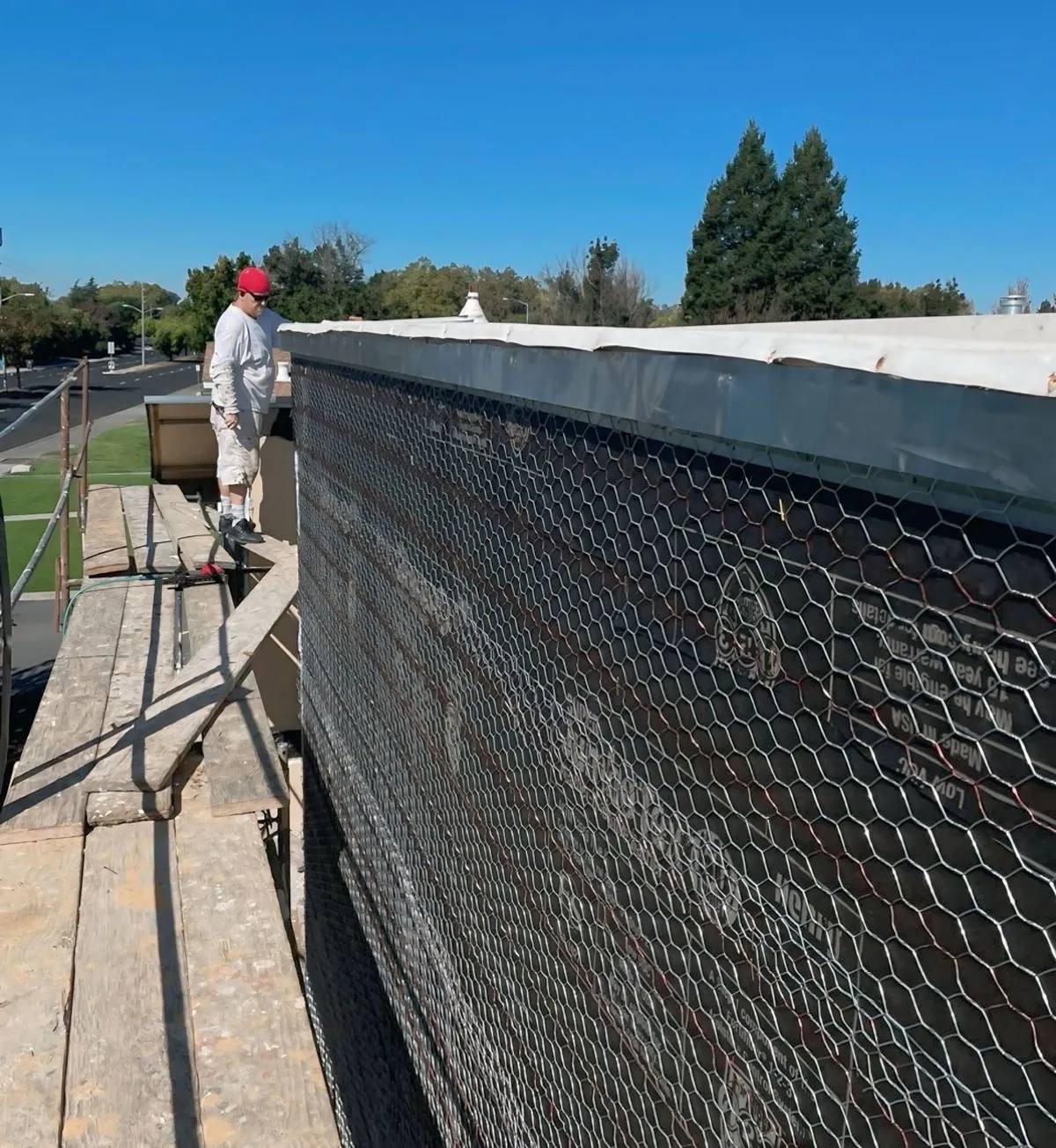
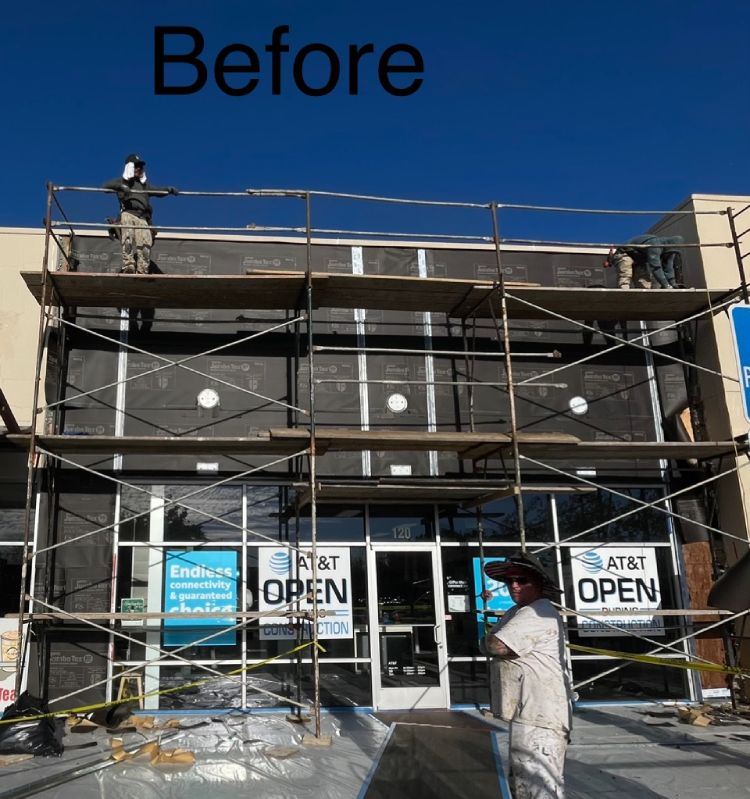
Many of our repair projects start exactly here: a chronic leak that traces back to a missing kick-out or an unflashed beam. On the AT&T store facade, water was penetrating at a beam above the storefront glass — the fix was a new beam, a new water barrier, and fresh stucco, integrated as one assembly.
What this capability covers.
Flashing retrofit & correction
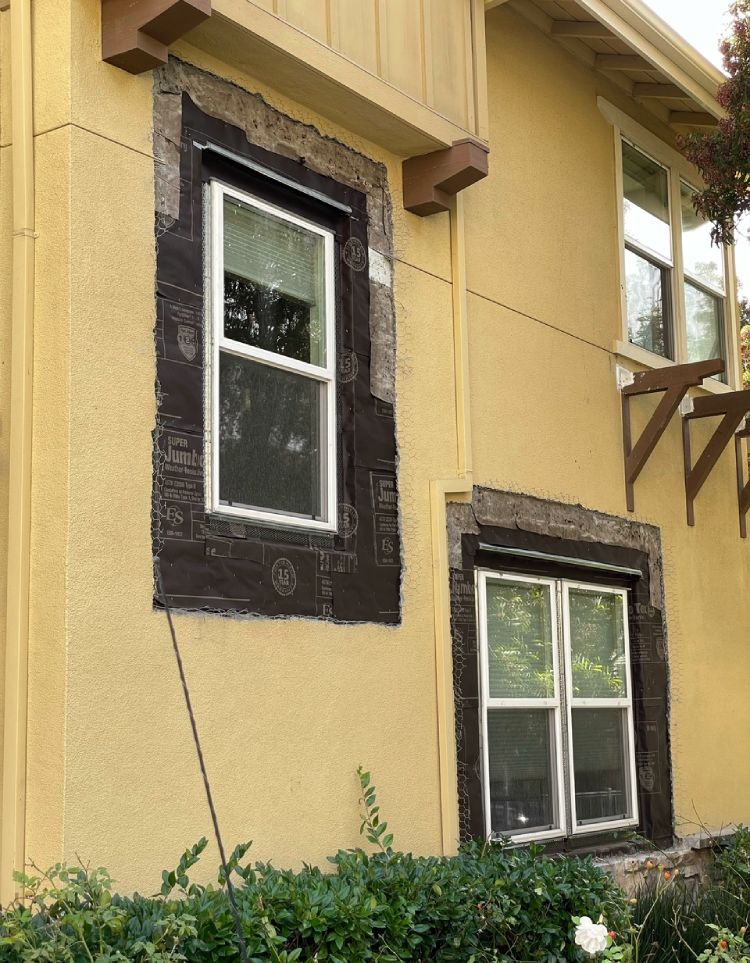
Head, sill, kick-out, and transition flashings added or rebuilt on existing walls, lapped correctly into the moisture barrier.
Weep screed & base-of-wall drainage
Functioning weep screeds and clearances restored at the stucco base so water drains out of the assembly instead of wicking up into it.
Penetration & ledger detailing
Deck ledgers, vents, fixtures, and other penetrations flashed and sealed as systems — not caulked as afterthoughts.
Stucco restoration at corrections
Every flashing fix finished with matched stucco patching, so the building looks untouched and performs better than before.
From the wall, not the brochure.



Asked before. Answered straight.
What is a kick-out flashing and why does it matter?
It’s the small diverter where a roof edge dies into a wall, kicking runoff away from the stucco and into the gutter. Missing kick-outs are one of the most common — and most damaging — defects we find: they concentrate roof water behind the stucco at a single point, year after year.
My stucco is buried below grade / sits on the patio. Is that a problem?
Usually, yes. Stucco needs a weep screed with clearance above grade or hardscape to drain. When soil, pavers, or concrete cover that edge, water wicks up into the wall. Restoring the drainage path at the base of the wall is a common and high-value correction.
Can flashing be added to an existing stucco wall?
Yes — that’s the heart of retrofit work. We remove stucco locally at the detail, install the correct flashing integrated with the barrier, and patch the stucco to match. The wall keeps its appearance and gains the detail it should have had originally.
How do I know if my drainage details have failed?
Look for staining below rooflines and windows, efflorescence (white mineral residue), peeling paint at the base of walls, and damp interior spots after storms. Those patterns point to specific failed details — which an inspection can confirm.
Do you coordinate with roofers and gutter contractors?
Yes. Wall flashing meets roofing and gutters at exactly the joints that leak, and we’re used to coordinating scopes with other trades — or advising your roofer on how the wall side needs to receive their work.
Adjacent scopes, same standard.
Request an assessment for flashing & drainage.
Tell us what the building is doing and where. We’ll diagnose the cause, then scope the correction honestly — proportionate to the actual problem, not the worst case.
Prefer to talk? 415-827-0782 · Mon–Fri 7AM–5PM